

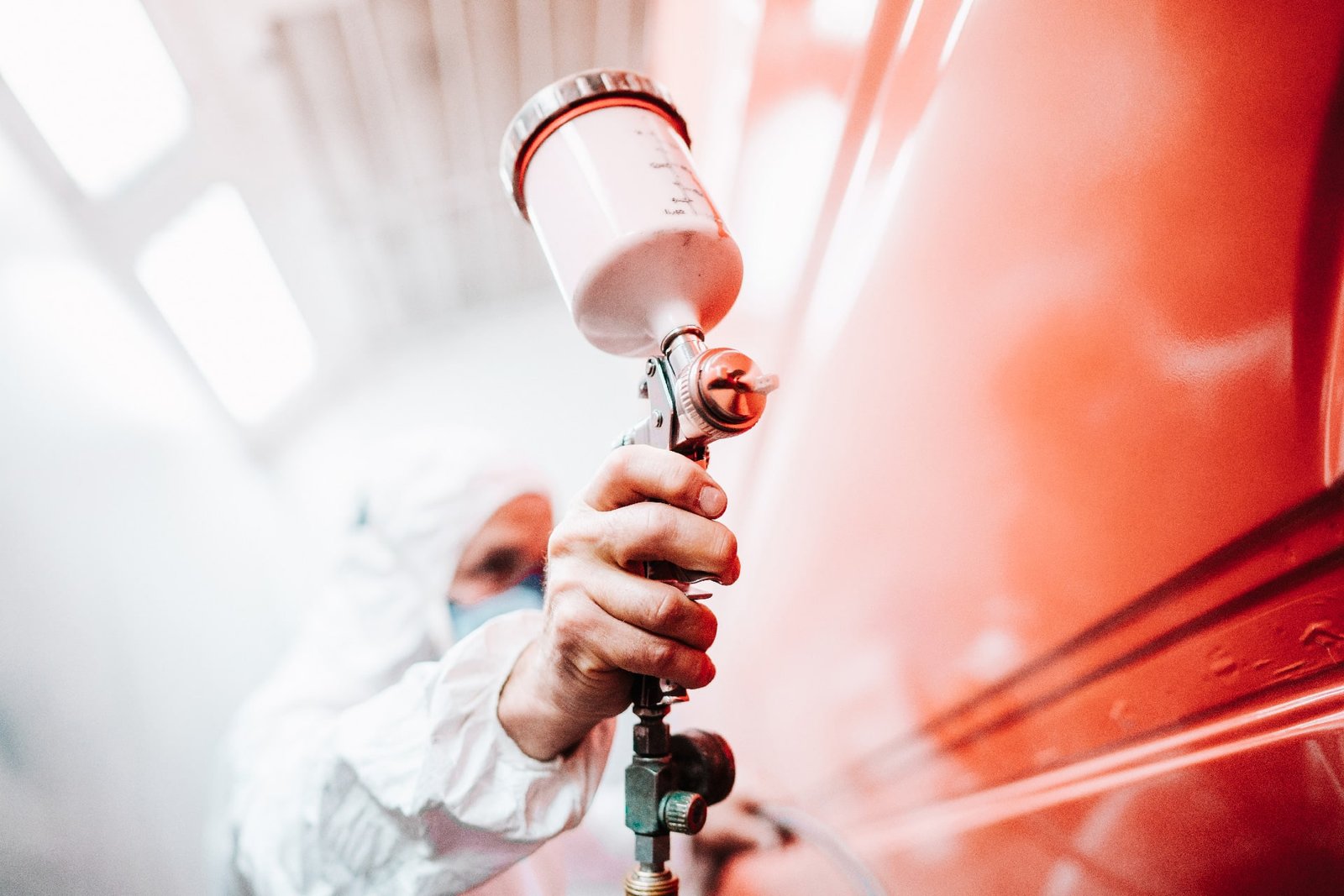
Car painting involves a multi-step process that begins with thorough preparation, including cleaning and sanding, followed by applying primer, base coat, and a clear coat for protection and shine.
Description
Here’s a more detailed explanation of the car painting process:
1. Preparation is Key:
Cleaning:
The car’s surface is thoroughly cleaned to remove dirt, grease, and any loose debris.
Surface Assessment and Repair:
Any dents, scratches, or rust are assessed and repaired, ensuring a smooth, even surface for painting.
Sanding:
The surface is sanded to create a smooth, even surface for the primer to adhere to.
2. Priming:
Purpose:
A primer is applied to create a solid, even base for the paint to adhere to, and to protect the metal from corrosion.
Types:
Different types of primers are used depending on the type of paint being used and the condition of the surface.
3. Base Coat Application:
Purpose: The base coat provides the color and finish for the car.
Types: There are different types of base coats, including solid, metallic, and pearlescent paints.
Application: The base coat is applied in multiple thin, even layers.
4. Clear Coat Application:
Purpose: The clear coat is a transparent, protective layer that adds shine and protects the base coat from UV rays and other environmental factors.
Application: The clear coat is applied in multiple thin, even layers.
5. Drying and Curing:
Drying:
Each coat of paint is allowed to dry completely before applying the next coat.
Curing:
The paint is then cured, which involves heating the car in a special oven to harden the paint and ensure its durability.
6. Finishing Touches:
Polishing:
The car may be polished to remove any minor imperfections and enhance the shine.
Waxing:
A final coat of wax can be applied to protect the paint and make it water-resistant.